
Flørli 4444 is a wooden staircase of 4,444 steps above the Lysefjord in Norway. My wife and I climbed the entire staircase and returned via the mountain trails. Here is how it went, how long it took us and what is useful to know before you go.
How My Wife and I Climbed 4,444 Steps at Flørli
Flørli is a small roadless settlement on the shore of the Lysefjord in Rogaland, southwestern Norway. It is best known for Flørlitrappene, a wooden staircase with 4,444 steps running uphill from the fjord alongside the old hydropower system. My wife and I climbed all 4,444 steps and returned by a different route over the mountain.
The staircase itself is about 1,470 metres long.
We took our time, stopped for breaks and took photos along the way.
After the stairs, we still had the mountain trail back to Flørli.
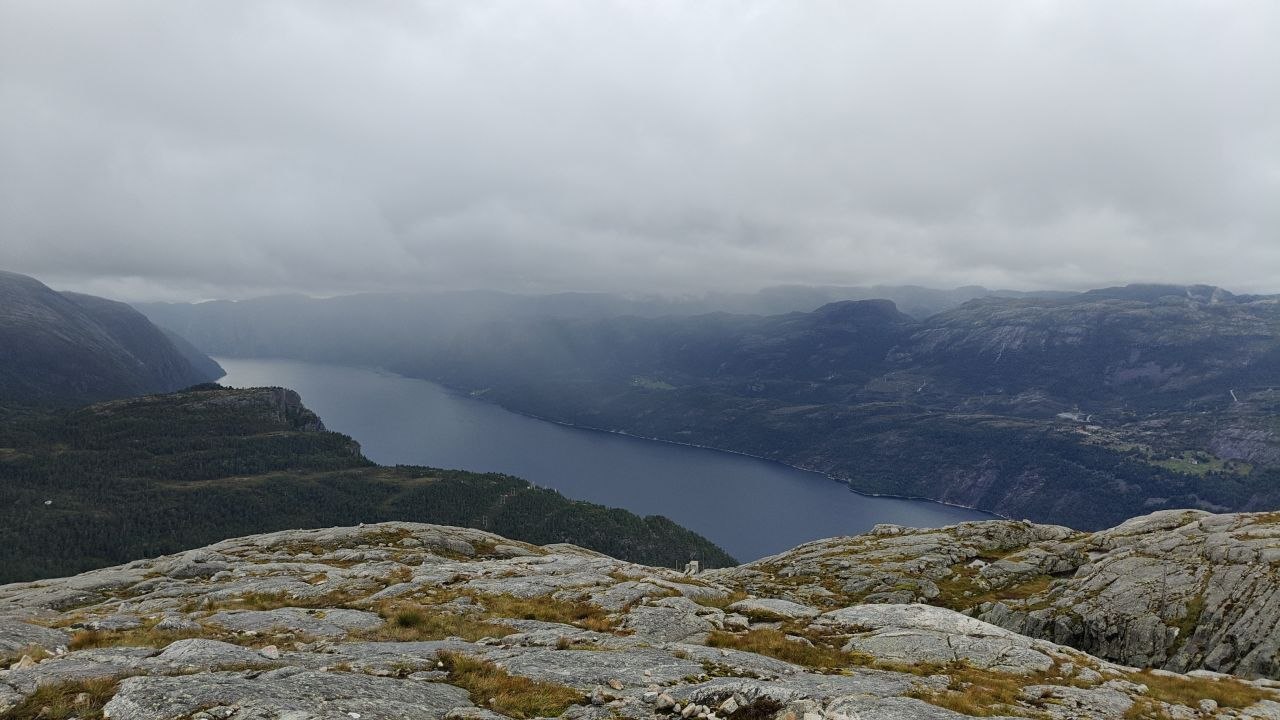
Where Flørli is and how to get there
Flørli sits on the shore of the Lysefjord in Rogaland, in southwestern Norway. Preikestolen and Kjerag are also located in the Lysefjord area.
On the map, Flørli does not look especially far from Stavanger, but there is no road all the way to the village. The final part of the journey has to be made by ferry or boat.
If you are travelling from Stavanger by car, you first need to reach one of the ferry terminals and then continue to Flørli by ferry or speedboat. It is worth checking the current route and timetable before you go. For us, the whole journey took roughly two hours.
The ferry brings you directly to the small settlement by the fjord. The old power station is right there, and the route to the 4,444 steps begins just above the village.
Why there are 4,444 steps at Flørli
The stairs were not originally built as a tourist attraction. In the early 20th century, a hydropower station was being developed at Flørli. Water from the mountain lakes was carried down through pipes to the power station by the fjord.
A railway line was built alongside the pipelines to transport people, equipment and materials. The wooden stairs were built next to it so workers could access and maintain the system.
Today Flørlitrappene has 4,444 steps and is known as the world's longest wooden staircase.
The power station opened in 1918. The old building is still there, and today it houses a café and a historical exhibition about Flørli.
The first few hundred steps
At the beginning, I was paying more attention to the surroundings than to the number 4,444. The staircase follows the old railway line, and as you climb, more and more of the Lysefjord opens up behind you.
You keep moving, stop for a minute now and then to take a photo, and then carry on.
During the first few hundred steps, we did not take any long breaks. We simply kept gaining height.
At around step 800, we stopped for a proper rest
This was the first place where we really stopped and took a little time to recover.
Around this point there is also a junction: you can continue up the full staircase or take a shorter route back towards Flørli.
By then I could definitely feel the climb, and there were still a lot of steps ahead. We sat for a while, rested, took a photo and continued.
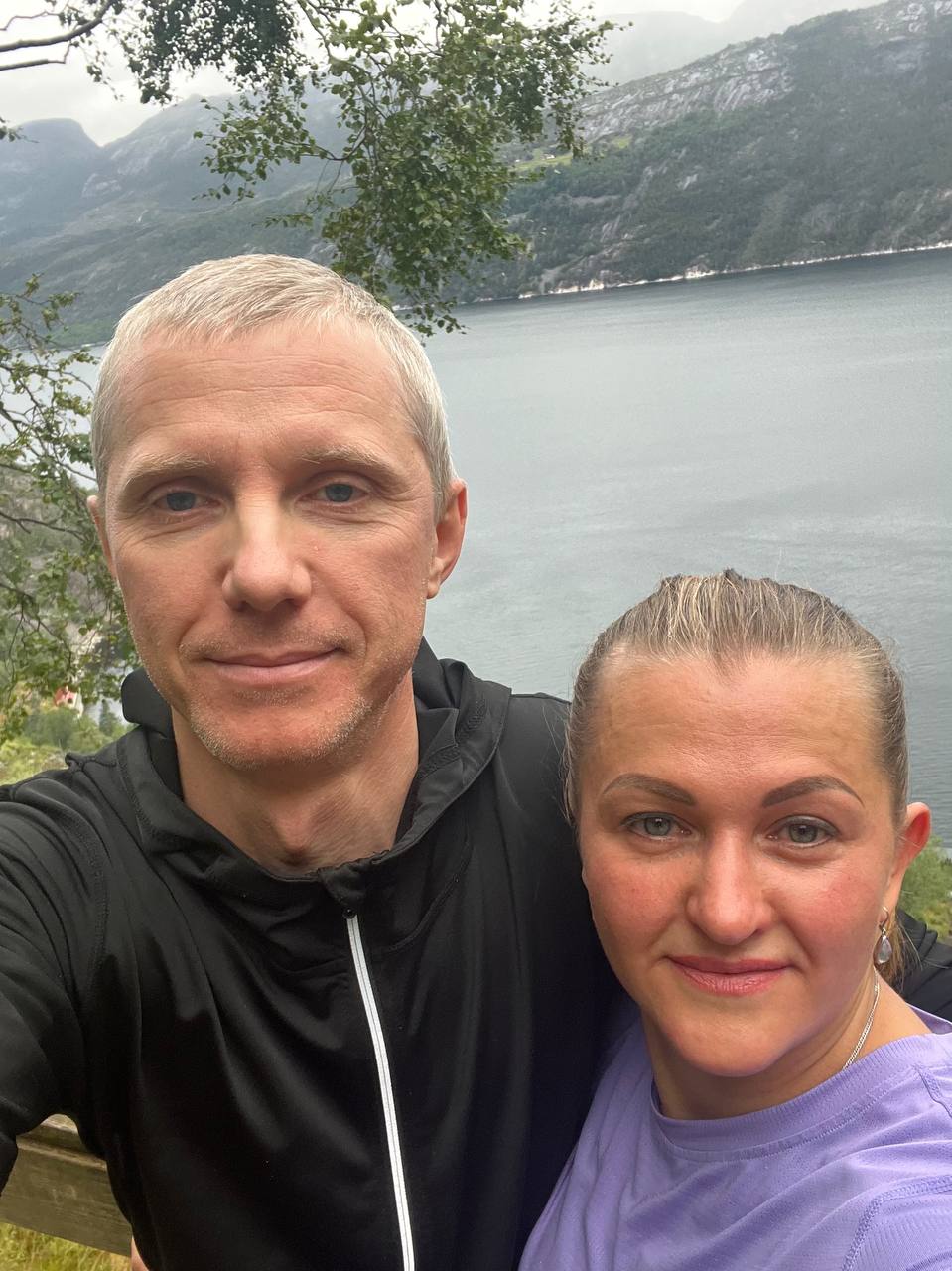
Higher up, there are better places to stop and rest
After that first break, we simply carried on climbing. Sometimes we covered a longer section, and sometimes we wanted another break sooner.
Higher up the route, there are places where you can stop a little more comfortably. Around halfway up is the Cable House, with the large old winch that was once used to pull the trolley along the railway.
Further up there are also two short but very steep sections. The average incline of the staircase is about 35 degrees, while these sections are steeper than 50 degrees.
On those steeper sections I used my hands to help myself, and at a few points I was almost on all fours. They are short, and after them we simply continued the climb.
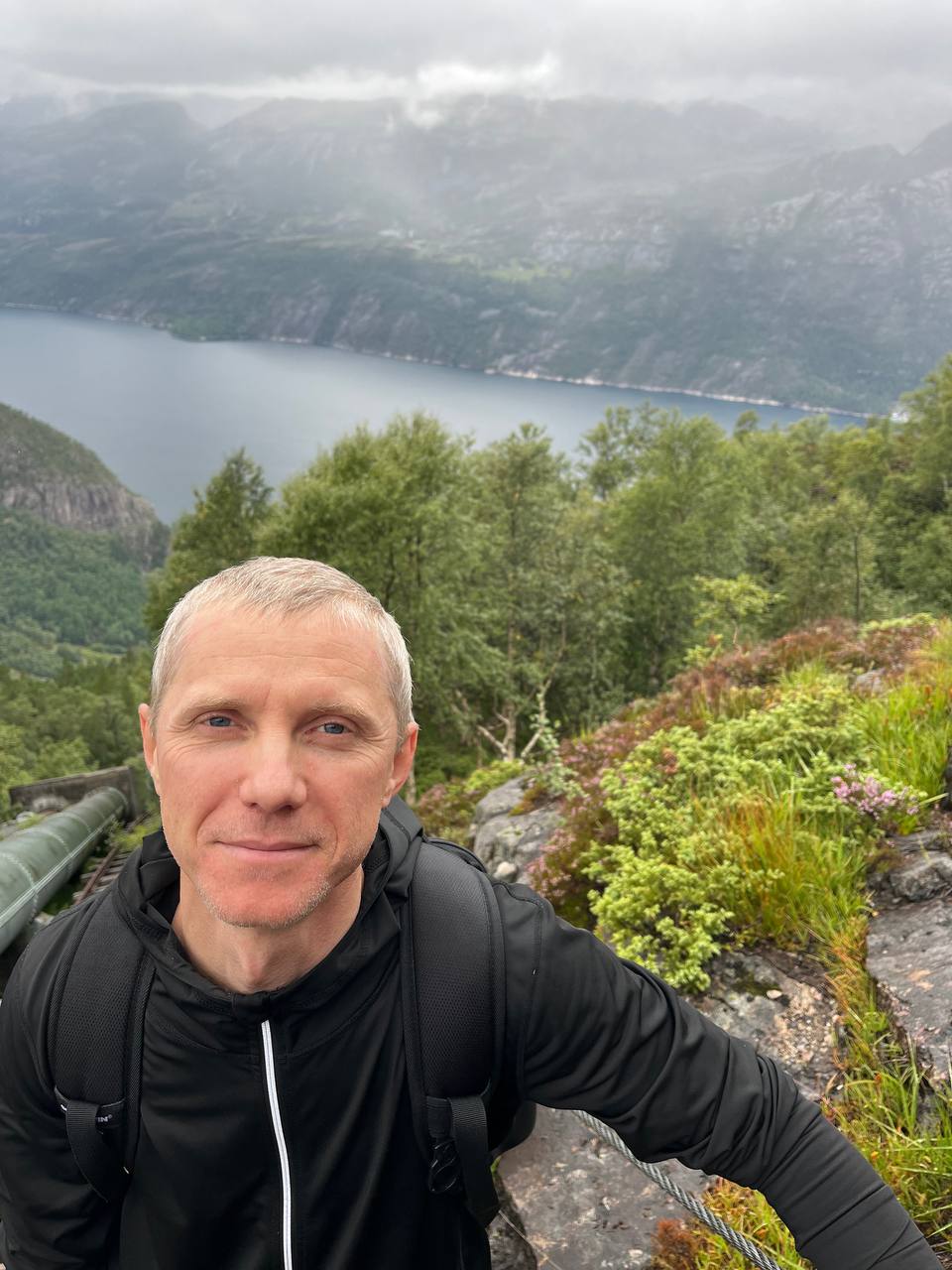
The climb took us more than two hours
We were not trying to rush. We stopped, took photos, looked out over the fjord and then carried on.
We had water with us, and along the way we also drank Activize from the basic FitLine set that we already use regularly.
Our two-plus hours were simply our own pace. For comparison, Flørli says experienced hikers in reasonable physical condition often complete the staircase itself in about one hour, excluding breaks.
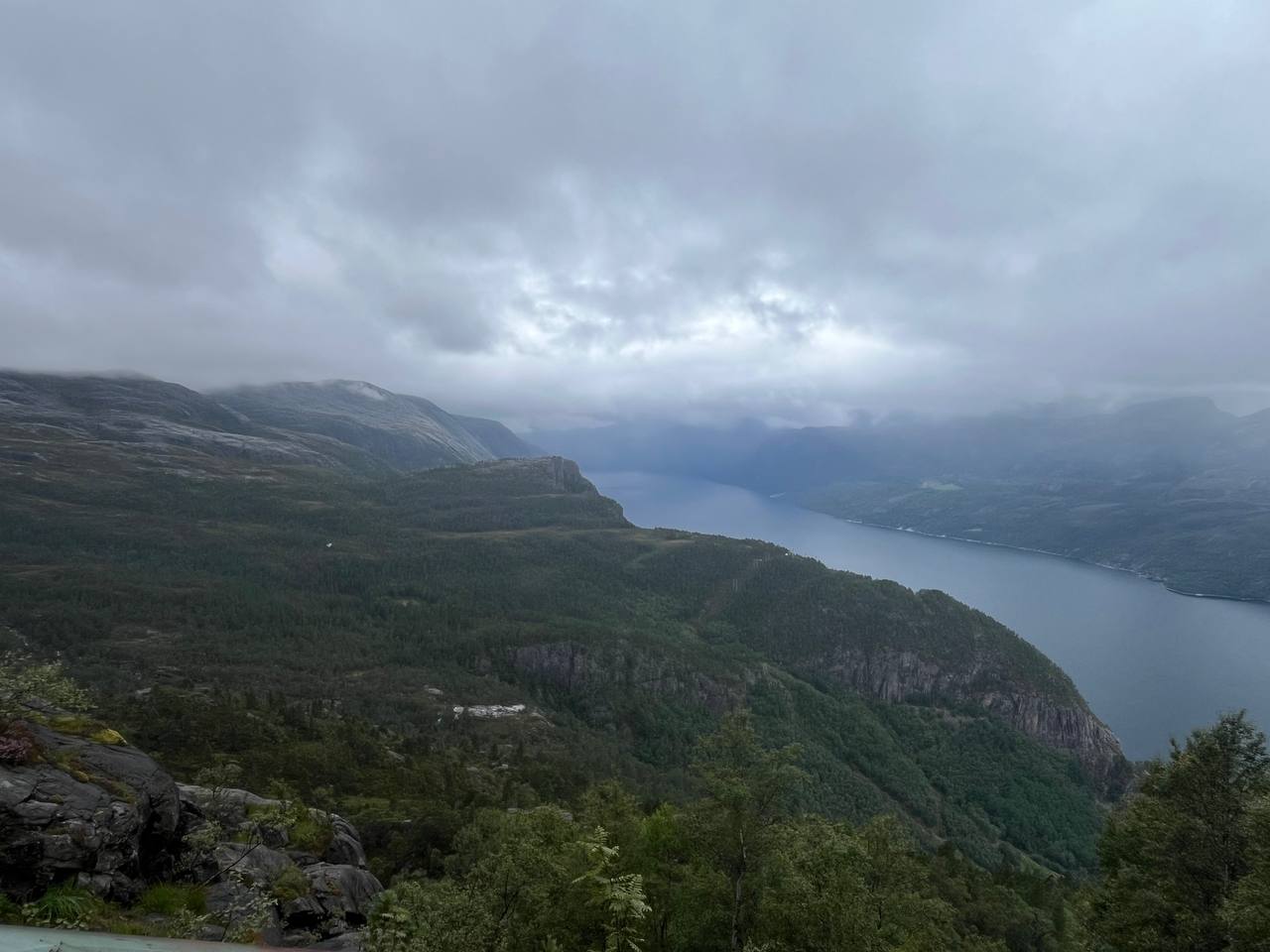
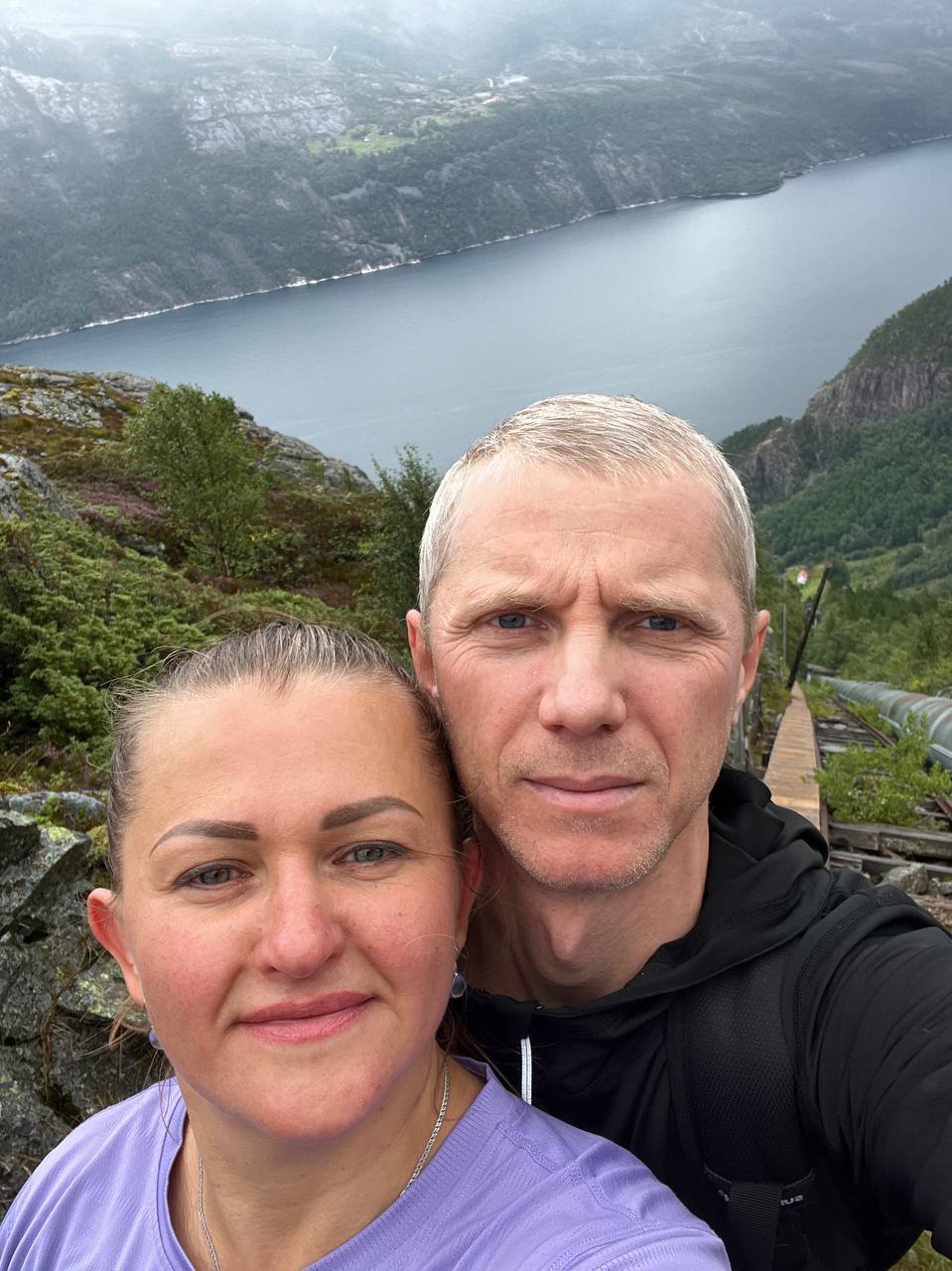
We took this photo after passing the halfway point
I do not remember the exact number of the step here. I only know that more than half of the staircase was already behind us.
We still had some way to go before reaching 4,444. We stopped, rested and continued.
The higher we climbed, the more of the Lysefjord we could see. You can see that in the photos as well.
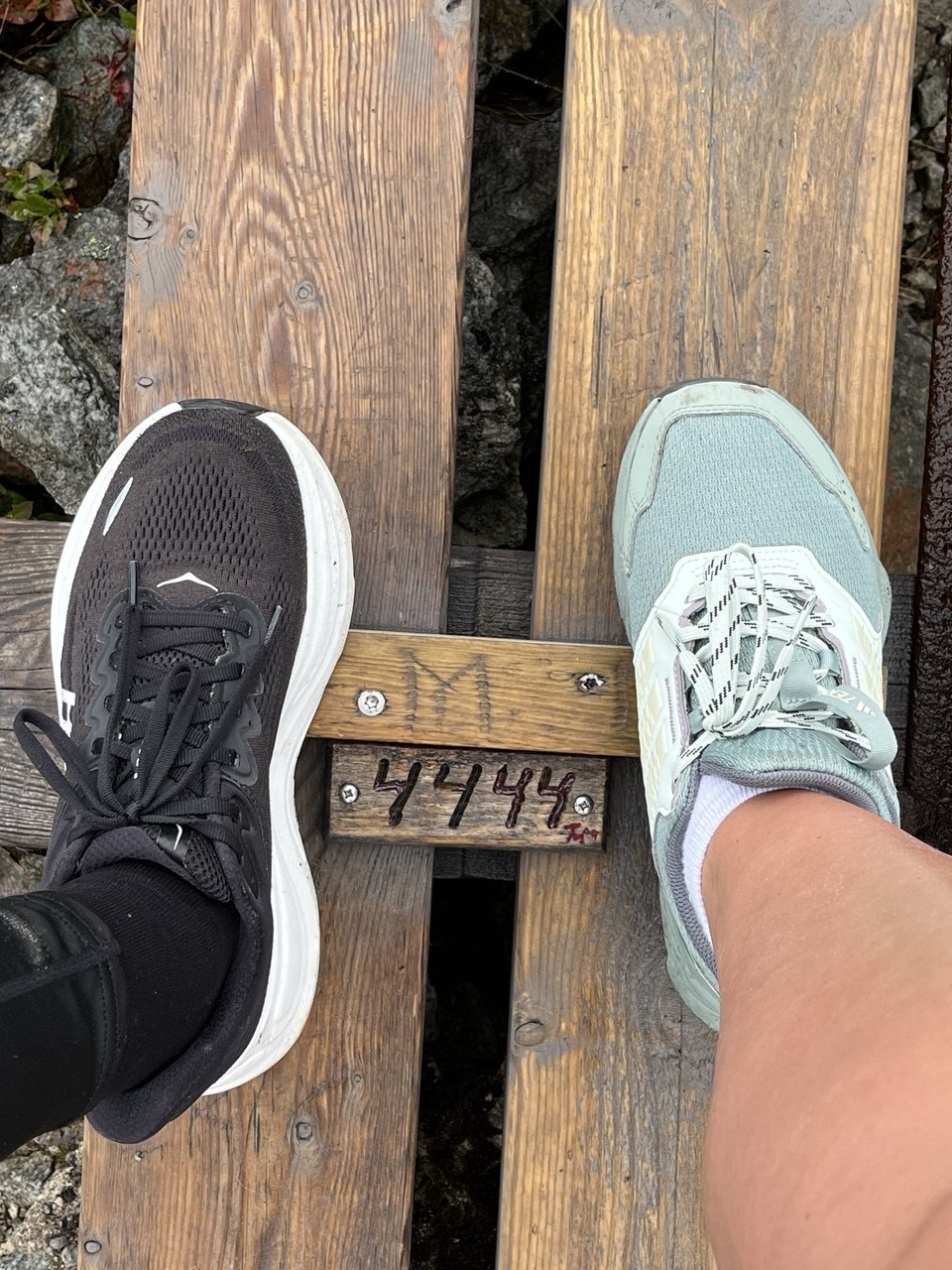
We made it
After more than two hours of climbing, it felt good to finally see the 4,444 marker.
The photo itself is simple: our shoes, a wooden step and the number 4,444.
We rested for a while, took a few photos and then started getting ready for the way back.
After 4,444 steps, there is still a long descent ahead
The main return route does not take you back down the staircase. Instead, you return on mountain and forest trails.
One of the official return options is Rallarstien. The route that combines the staircase on the way up with Rallarstien on the way down is about 5 kilometres in total.
Walking back down the staircase is not recommended. The stairs are narrow and very steep in places, and descending hikers can get in the way of people climbing up.
For us, the way back actually took longer than the climb itself. So reaching step 4,444 does not mean the hike is over.
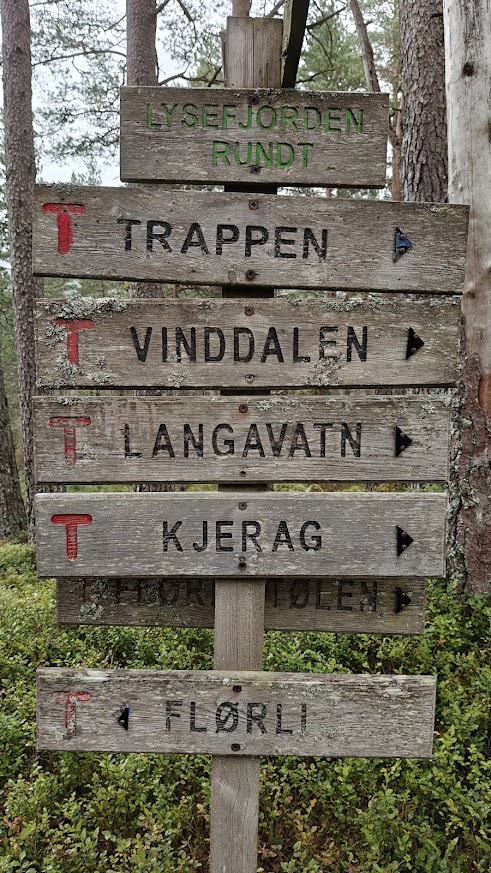
We followed the red T trail marks and signposts
Once the staircase is behind you, the route continues on regular mountain trails. At that point, it is important to follow the trail markings rather than simply choosing whichever path looks most obvious.
On our route, we followed red T marks painted on rocks. You see one mark, continue along the trail and then look for the next one.
There are also signposts at some of the junctions. They are especially useful when the trail splits and you need to check which direction to take.
Flørli also states that the return trails are marked with signs and paint. The route is marked, but you still need to pay attention and keep looking for the next trail marker as you go.
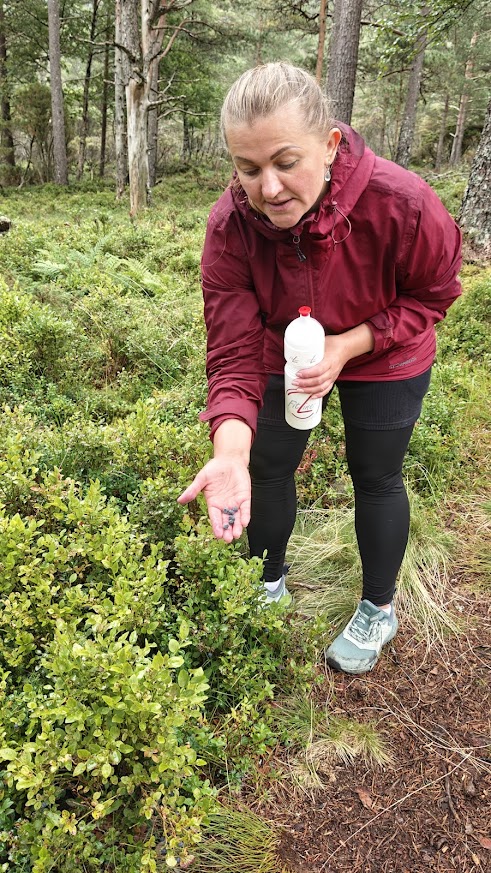
My wife even stopped to pick berries
The way back was long, and we stopped several more times along the trail.
At one point my wife spotted some berries and started picking them. I took a photo.
So the memories we brought back from Flørli were not only about the staircase and the views over the Lysefjord.
For me, this day was about more than 4,444 steps
Only a few months earlier, I had done my first proper mountain hike after almost three years of living in Norway. Now we had completed Flørli 4444.
That does not mean we suddenly became people who spend every weekend looking for another summit. We have simply started going out more, walking more and seeing more of the places that have been around us all this time.
It also mattered to me that my wife and I spent the whole day together. With three children, work and all the usual things that need doing, a full day together does not happen every week.
And there is one simple thought from Flørli that stayed with me. I do not want to turn every hike into a big life lesson, but here the idea is almost impossible to miss.
You cannot climb 4,444 steps in one giant step. You do the first one, then the next, then ten, then a hundred. Sometimes you stop, rest and continue.
A lot of things in life work the same way. Not everything happens at once, but step by step you can get much further than it may seem at the beginning.
What I would keep in mind before the hike
How difficult Flørli 4444 feels is very individual. Some people climb the stairs quickly, while others need more breaks. I would not judge the route only by someone else's time or by how difficult another person found it.
After the 4,444 steps, you still have to get back to Flørli. For us, the descent took longer than the climb.
This matters especially on the way down, where the trail includes rocks, roots and uneven ground.
Conditions higher up can be different from the weather down by the fjord.
There are places to stop along the route. There is no reason to measure your hike against someone else's time.
Our climbing and return times are simply our own experience. For the staircase length, elevation gain, steep sections, return routes and trail markings, I checked the information from Flørli 4444, Flørli FAQ and Visit Norway.
Common questions about the Flørli 4444 route
The things I would have wanted to know before going.
Where is Flørli and how do you get there?
Flørli is located on the shore of the Lysefjord in Rogaland, southwestern Norway. There is no road directly to the village. From Stavanger, you first need to reach one of the ferry terminals and then continue to Flørli by ferry or speedboat. Check the current route and timetable before travelling.
How many steps are there at Flørli and how high is the climb?
Flørlitrappene has 4,444 wooden steps. The staircase itself is about 1,470 metres long with an elevation gain of around 740 metres.
How long does it take to climb Flørli 4444?
Flørli states that experienced hikers in reasonable physical condition often complete the staircase itself in about one hour, excluding breaks. My wife and I took more than two hours. That is not a benchmark, just our pace.
Are there places to rest and is there a shorter route?
Yes. At around the first 800 steps there is a junction where you can continue the full climb or take a shorter route back towards Flørli. Higher up there are other places to stop, and around halfway you reach the Cable House with its old winch.
How difficult is Flørli 4444?
That depends on your fitness, pace and how comfortable you are with heights. The average incline is about 35 degrees, and there are two short sections steeper than 50 degrees. On sections like these, using your hands for support is completely normal.
How do you find the way back after the 4,444 steps?
The return trails are marked with signs and paint. On our route, we followed red T marks painted on rocks as well as signposts at junctions. During the descent, keep looking for the next trail marker and check the direction at each junction.
Can children hike Flørli 4444?
Children do complete the route. Flørli says children from around eight years old can generally manage the full hike, although it depends on the individual child, their experience and physical condition. There is also a shorter route for families with younger children.
Can you walk back down the staircase?
Walking back down the staircase is not recommended. The stairs are narrow and very steep in places. There are separate return routes over the mountain, including Rallarstien.